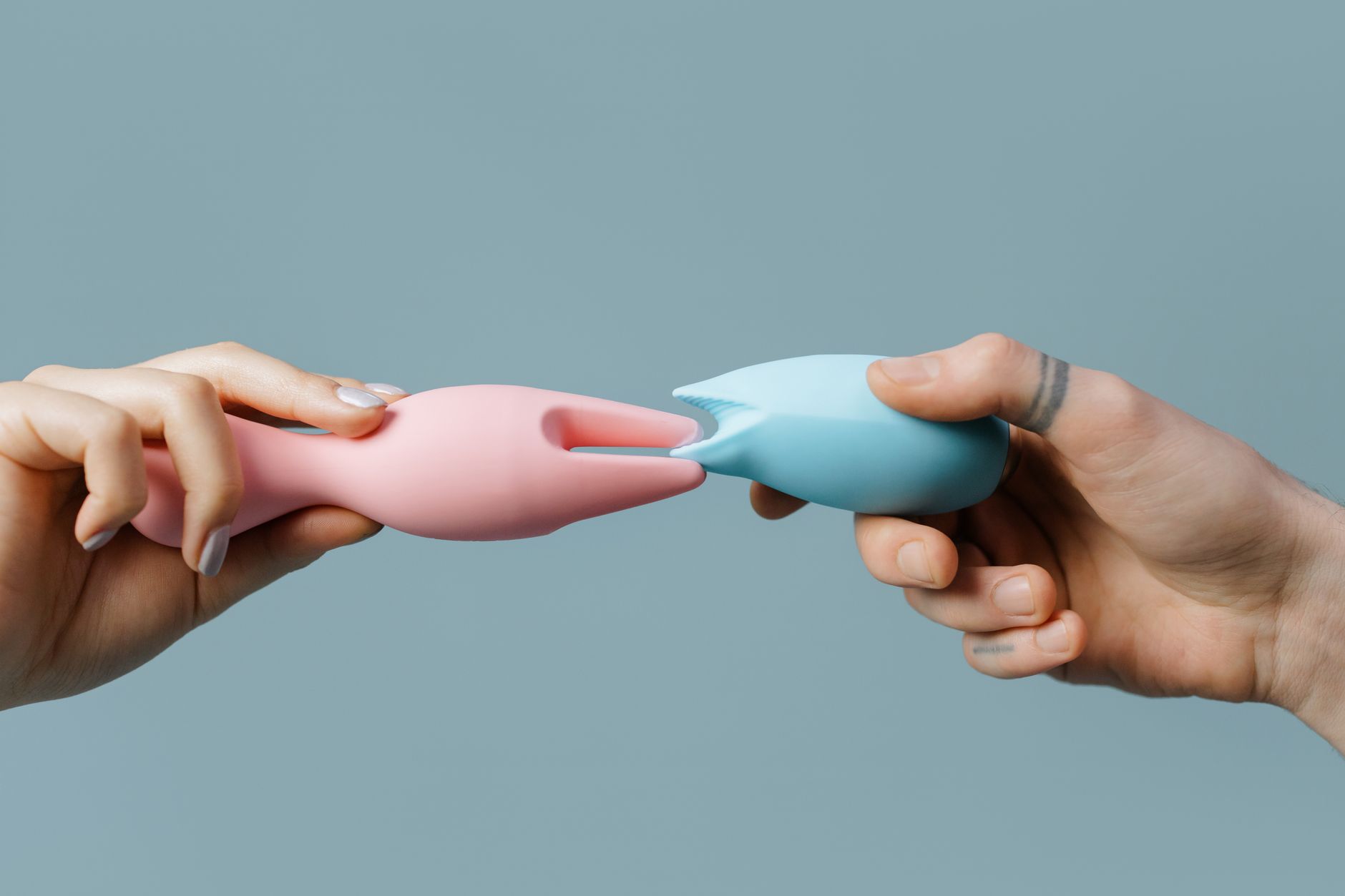
Let's be real about what usually happens
A partner buys a toy. Hands it over. Then one person uses it while the other watches, or they both ignore each other for ten minutes while someone chases an orgasm. No eye contact. No talking. Just two people in the same bed occupying parallel universes.
That's not connection. That's doing separate things at the same time.
Why presence matters more than the toy itself
Here's the thing: a Lemon Vibrator is excellent at what it does, but it's not magic. The magic is in the synchronization. When you use a clitoral vibrator as a bridge between two people instead of a solo tool, something shifts. Your nervous systems start to regulate each other. You're actually present with someone instead of lost in sensation.
This matters because most couples report that introducing toys actually creates distance at first. The vibrator becomes a distraction. Your partner feels sidelined. You feel observed rather than desired. And suddenly the thing that was supposed to boost your sex life becomes another source of disconnection.
The fix isn't complicated, but it does require intention.
Start with a conversation that isn't about sex
Seriously. Sit down outside the bedroom and talk about what you each want pleasure to feel like. Not "do you want me to use a toy," but deeper stuff: Do you want to feel more wanted? More powerful? Less responsible for orchestrating everything? Do you want touch to last longer? Do you want to feel more present, or less anxious?
When you know what your partner actually craves, the vibrator becomes a tool for delivering it. If your partner wants to feel desired, that means they get to hold the lemon vibrator and use it on you while watching your face. If you want less pressure to perform, that means you can relax while they do some of the work.
The conversation also plants a flag: this isn't something that's happening to you. You're choosing it together.
Build a rhythm where you're not on opposite timelines
One of the biggest disconnection culprits: one person orgasms and then everything stops. The other person is left mid-climb with nowhere to go.
With lemon vibrators, you can avoid this by alternating focus instead of racing to the finish. Spend five minutes on you. Then five minutes on your partner. Then back. This creates a seesaw rhythm where pleasure stays shared. You're watching them respond. They're present for your responses. It becomes a conversation instead of a solo performance.
Practically, this means one person might use the clitoral vibrator on their partner for ten minutes, pulling it away occasionally to touch them in other ways, checking in verbally about pressure and sensation. Then you swap roles. The person who's receiving gets to fully experience pleasure without the job of managing arousal. The person giving gets to be present and attentive.
It sounds simple because it is. But most couples skip this step entirely.
The power of slower, longer sessions
When you're using a lemon sucker or any clitoral vibrator during partnered play, resist the urge to rush toward orgasm. This goes against every cultural message you've received, but it's the strongest move for connection.
Spend fifteen minutes just with the vibrator on lower settings. Watch what happens to your partner's breath. Notice when their body shifts. Talk about what different patterns feel like. Ask them to show you where they want pressure. Let them adjust the angle.
This transforms the vibrator from a pleasure accelerator into a communication device. You're literally learning your partner's body in real time. You're not assuming anything. You're getting feedback. And because you're slowing down, your own nervous system stays regulated instead of spiking into performance mode.
Orgasm will come. But you're not aiming for it as the goal. You're aiming for connection, and orgasm becomes a byproduct.
Presence beats performance every time
One of the most underrated moments in partnered play: just watching each other without judgment. If you're using a Lemon Vibrator on your partner, stay present with them. Make eye contact. Notice when they close their eyes. Ask them what they're feeling. Tell them what you see.
This is where the real intimacy lives. Not in the intensity of the vibration, but in the fact that you chose to show up and pay attention to someone else's pleasure. That's the stuff that creates actual connection.
When I work with couples, the ones who report the most satisfying intimate lives are the ones who prioritize being present over achieving specific outcomes. They use tools like clitoral vibrators, sure. But the tool is secondary to the attention they're giving each other.
The conversation that happens during, not before
Talk during partnered play. Not in a clinical, detached way. Just naturally. "Does this feel good?" "Want me to stay here or move?" "I love watching you respond to this." These small check-ins do two things: they keep you connected, and they make sure pleasure is actually happening for both people.
Many couples use silence as a way to avoid awkwardness. But silence is where disconnection grows. Sound and words and even laughter are what keep intimacy alive.
When your orgasm timelines don't match (and they won't)
You might come quickly. Your partner might need twenty minutes. That's not a problem if you've already agreed that you're not racing to the same finish line. After you orgasm, your job isn't to tap out. It's to stay present and help your partner get where they need to go.
This is where lemon vibrators are exceptionally useful. You can come and then transition into using the vibrator on your partner while they continue. You're still engaged. You're still present. You're still participating.
If you're interested in exploring how different vibration patterns work with partnered timing, the post on exploring different sensations with lemon vibrators walks through that in detail.
The physical setup that actually allows for connection
Position matters. If you're using a clitoral vibrator on your partner, you need an angle that lets you see their face and touch other parts of their body simultaneously. Usually this means they're on their back, you're beside them or between their legs, and you can reach them with one hand while the other holds the vibrator.
This might feel awkward the first time. That's fine. Awkwardness means you're doing something new, not that you're doing it wrong.
The goal is positioning that allows both people to maintain eye contact and touch, not maximum efficiency.
What to do if one person is more into toys than the other
Some partners enthusiastically want lemon vibrators in the mix. Others feel hesitant or insecure. Both feelings are valid. The key is not to push. Instead, ask your hesitant partner what would make them more comfortable. Do they want to hold the toy? Do they want to direct you on where to use it? Do they want to start with something smaller, like a lemon clitoral vibrator that's less intense than what you were imagining?
Hesitation often signals fear of being replaced or concerns about adequacy. Address that directly: "I want you here. I want your hands on me too. This is about us, not about me needing something you can't give me."
That honesty matters more than the toy itself.
The deeper benefit you'll notice over time
When couples learn to use vibrators as connection tools instead of solo devices, something shifts in their overall intimacy. They start communicating better about other things. They become more comfortable being vulnerable. They stop performing and start being present.
That's the real win. The Lemon Vibrator is just the vehicle.
FAQs: Connection and partnered play
How do I know if my partner actually wants a vibrator involved or if they're just agreeing to make me happy?
Ask them directly in a low-stakes moment, outside the bedroom. Listen for whether they sound excited or resigned. Excited sounds like specific questions: "What does it feel like?" Resigned sounds like vague agreement: "Sure, if you want to." If you hear resigned, dig deeper. Ask what would actually feel good to them.
What if the vibrator is so distracting that we lose the intimacy?
You've likely skipped the presence step. Try this: use the vibrator for five minutes, then put it down and just touch each other for the next ten. The vibrator becomes punctuation, not the whole sentence. You'll feel the difference immediately.
Is it okay for my partner to use the vibrator on me the whole time, or should we take turns?
Both are fine, but taking turns creates more balanced connection. When you're both getting a turn being the focus, there's less resentment and more mutual investment. That said, if your partner is very into being the active partner, let them lean into that. The point is consent and communication, not rigid equal turns.
How do I bring this up without making it seem like our current sex life is lacking?
Frame it as expansion, not correction. "I think it would be fun to explore this together" lands differently than "We need to fix what's not working." You're not diagnosing a problem. You're inviting an adventure.
What if I feel self-conscious being watched while the vibrator is being used?
That's normal. The antidote is repetition and eye contact. Every time you feel the self-consciousness, look at your partner. Notice that they're still there, still interested, still attracted to you. Over time, being watched becomes being witnessed, and that's when real intimacy happens.
Should we use a vibrator during sex with penetration or only solo?
Both work. During penetration, the vibrator adds clitoral stimulation that penetration alone doesn't provide, which often helps people reach orgasm. During solo stimulation, the vibrator is the main event. Neither is better. It depends on what feels good to both of you.
The through-line: presence over everything
I've worked with hundreds of couples, and the ones who feel most connected aren't the ones with the best sex toys. They're the ones who show up and pay attention to each other. Lemon Vibrators are excellent tools for partnered pleasure, but the tool only works if you're actually present with someone. Use it as an excuse to focus on your partner instead of a distraction from them, and everything changes.